Final Declaration of the XVIII International Congress of Educating Cities
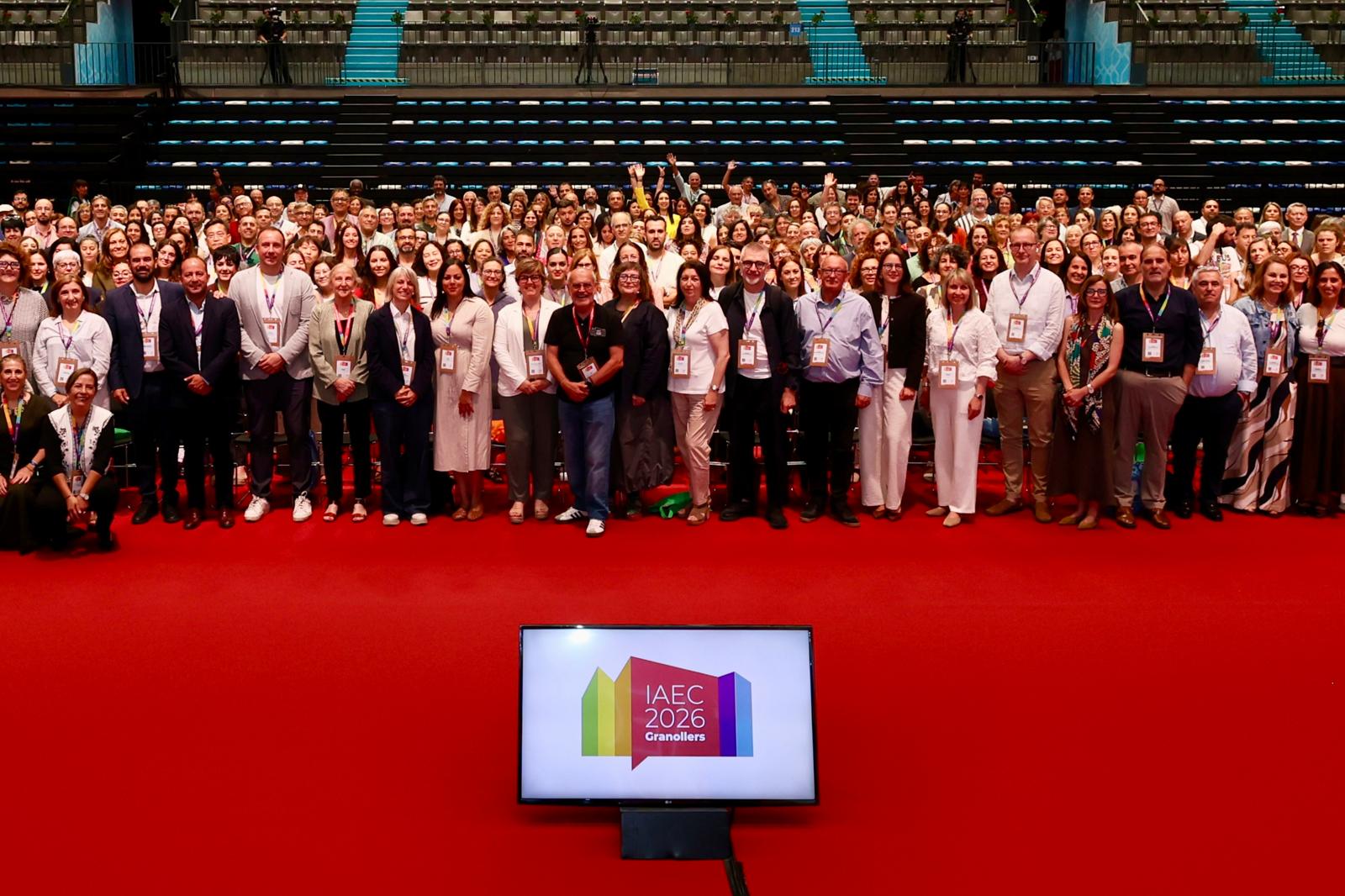
The Congress's proceedings, despite the global context of heightened political tensions and even serious armed conflicts, have taken place in a peaceful, participatory, and constructive atmosphere centred on the core values of the Charter of Educating Cities. This atmosphere has been concretised through plural, open, and sincere dialogue on the part of the 141 cities of the peoples 15 countries. The result of the multiple exchanges of ideas and experiences throughout these days is completed with this Final Declaration as a synthesis of the main contributions of all the delegates.
The Charter of Educating Cities is the framework for meetings between cities and towns belonging to the association that are committed to education, peace, and the well-being of all people. Given the complexity and harshness of the global context, the Charter is revealed as especially necessary; its Preamble warns of the “The danger of populist drifts that hinder life, democratic trust, and world peace”; and, further on, the mention of the “risk of radicalisation and violent clashes”which unfortunately recent reality has confirmed. Principle 3 clearly proposes “Education for diversity, international solidarity and cooperation, recognition and respect for indigenous peoples and other discriminated ethnic groups, and world peace.”, principles of strong commitment to one of the Congress's work axes. Principle 20, which closes the Charter, also frames the Congress's activities well when it states: “The educating city will raise awareness of the interdependence of local and global dimensions that global challenges pose.”.
In this global context, Educating Cities can and want to, as evidenced at the Congress, act as a pacifying, dialogue-oriented, and constructive counterweight to human rights values and rights.
The general title of the Congress, “Education and culture in the city: community, critical sense and creativity”, focuses on principle 4 of the Charter, which highlights the importance of promoting “the right to culture and participation of all people, and in particular, of those groups in situations of greater vulnerability, in the cultural life of the city as a means of inclusion, of fostering a sense of belonging, and of good coexistence”A contribution that includes the participation of citizens in a living and changing culture, stimulating creativity and supporting cultural initiatives, both avant-garde and popular culture.
Therefore, this Congress proposes that the great values of education and culture be made real in the city through three specific avenues, given that education and culture are not practiced in a vacuum, but necessarily and fortunately within a community; and because the community does not become oppressive, it requires the critical sense of the people who comprise it; and, finally, in the face of current major socio-political challenges and, especially, in the face of the accelerated technological disruption we are experiencing, creativity is essential, that creativity which singles us out as individuals against the danger of control and homogenisation posed by the two major emerging global powers: artificial intelligence, especially generative AI, and big data.
The first axis discussed at the Congress relates to the city as a community. The mere accumulation or aggregation of people in the same urban space, without any awareness or conditions of a true community, does not make a city; it makes a warehouse. Community, and therefore the true city, exists when all people feel they are a real part of a common and welcoming “us,” where each person sees themselves recognized without reservation and also sees their “right to the city” respected. Both the full sense of a common and welcoming “us” and each person's “right to the city” are incompatible with discrimination, inequality, and exclusion. Educating Cities value plurality in equality and the inclusion of all people in a climate of dialogue, participation, and exchange of diverse but not confrontational ideas, values, and cultural forms. Furthermore, they recognise that human life is eco-dependent and interdependent: to exist, we must look after one another; we must promote and stimulate care and make society as a whole responsible for it.
The second axis has focused on promoting critical citizenship. A well-constituted community must avoid the risk of confusing equality with such homogeneity that it ends up limiting the freedom and initiative of its members. One of the keys that guarantees people's freedom, which is also particularly threatened today by information overload and constant manipulation by large technology platforms, is their education in critical thinking. The adjective “critical” does not refer to an attitude of systematic disagreement with everything – which is in fact precisely unscathed because it does not value differences and nuances – but rather responds to an analytical disposition of information and the environment that seeks nuances, distinctions, and differences, and that weighs reasons for and against everything; therefore, it engages in dialogue with arguments and does not dogmatise, nor does it disqualify with outbursts or insults. Critical thinking is based on reasonable criteria and interpretations, not just on data; it incorporates the relationship with context as the main determinant of every human and social fact. Educating critical thinking is, nothing more and nothing less, than educating freedom.
The third axis of the work has focused attention on the creative condition of people and the city. Creativity is a concept that can be well understood in contrast to its opposites, which would be inaction, repetition, or copying. If a person does not act, or if they only repeat and copy, they become a passive being without individuality or their own profile; that is, they resemble a dead or unconscious object, far from their condition of a living and conscious subject. A true city made up of passive beings, repetitive and mere copies of each other, is not conceivable: we would return to the notion of cities as warehouses for objects.
Creativity, therefore, in a positive sense, can be understood as an active disposition, generating initiatives that seek expression of one's own way of seeing the world and unique and stimulating forms of community connection. Creativity guarantees us, as individuals and as communities, independence from old mental inertia and prejudices; the new challenges we face also require creative solutions and the joint action of local governments and citizens. Therefore, promoting programmes that strengthen citizens' creative capacities will contribute to generating social capital.
Therefore, the cities and towns participating in the XVIII International Congress of Educating Cities, held in Granollers in May 2026, aspire to live in a progressively more just and peaceful world, based on the following objectives:
-
To foster education and culture in order to achieve communities that, from their internal diversity, ensure social cohesion, intercultural dialogue, and the inclusion of all people, without discrimination, in a project of democratic coexistence.
-
To foster critical thinking in the citizenry, both educationally and culturally, as a guarantee of freedom within the city, autonomy, and the preservation of human rights and new digital rights, in the face of the threat of control from generative artificial intelligence and big data technology platforms.
-
To foster creativity in all people, associations and institutions, from all educational and cultural levels within cities, to guarantee a full life as individuals with unique identities and initiative, capable of imaginatively improving personal lives and social coexistence, and of facing the global challenges we live through.
For this, we commit to:
-
Create meeting spaces that foster intercultural dialogue between different cultural, religious, and linguistic communities.
-
To promote community initiatives that contribute to building a sense of community, where differences are recognised and respected, and a sense of shared belonging is fostered.
-
Foster social conflict resolution initiatives, community mediation, and the promotion of a culture of peace through dialogue.
-
To foster projects that celebrate diversity and plurality, demonstrating how these characteristics enrich urban life and contribute to the city's identity.
-
To drive educational and cultural initiatives that address and seek to reduce inequalities, exclusion, and segregation, promoting policies and actions that benefit the entire community.
-
To foster participation by promoting spaces for dialogue where people can express their ideas, listen to different viewpoints, and learn to argue respectfully and with sound reasoning.
-
To foster citizen participation in the transformation of the urban environment, through projects that strengthen participatory democracy and the collective construction of the city, acting proactively in the face of the current eco-social crisis we are experiencing.
-
Promoting critical thinking and reflection on the information we consume, addressing the phenomenon of disinformation and empowering citizens to question and analyse sources of knowledge.
-
Fostering citizen creativity through workshops, activities, and programmes that allow residents to explore and develop their creative potential.
-
Driving transformative education models that combine creativity and innovation in different contexts, such as community, technological or cultural projects.
-
To create collaborative platforms or spaces that facilitate the exchange of knowledge, experiences, and good practices, thus strengthening collective creativity.
-
To promote co-creation initiatives between citizens and the municipality's cultural centres, where artists, young people, and adults can express themselves, experiment, and share their creative ideas.
-
To drive creative initiatives to tackle urban challenges through co-creation laboratories where citizens and local government can reflect on their environment and share creative proposals.