All set to celebrate the 18th International Congress of Educating Cities in Granollers
From 26 to 29 May, 14 talks and 100 educational experiences from around the world will be presented.
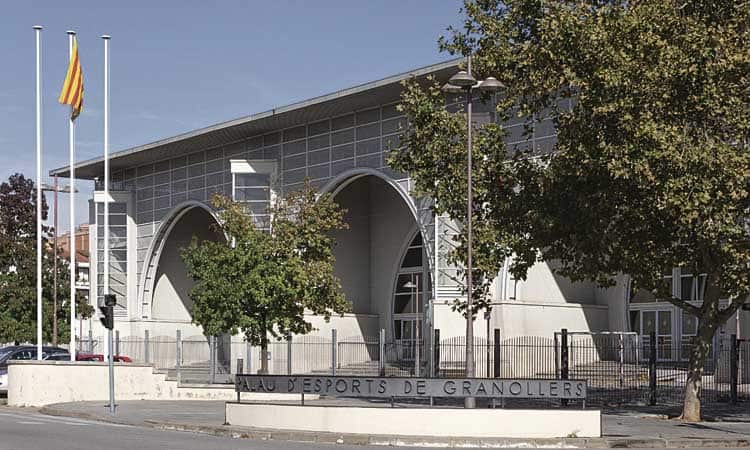
The 18th International Congress of Educating Cities already has over 400 registered that in the coming days will arrive in Granollers. They will come from the 500 cities around the world that are part of the International Association of Educating Cities (IAEC). For four days, from May 26th to 29th, the Palau d’Esports will be the nerve centre of this movement that claims the educational role of cities.
The congress will feature fourteen world-renowned speakers from various disciplines: from pedagogy, sociology, philosophy and urbanism, to culture, art or journalism. Their voices will be of great importance for reflecting on the educational role of cities. Among others, personalities such as the Italian pedagogue will be featured. Francesco Tonucci the American professor and activist John A. Powell (written in lowercase by choice).
As well as the two conferences by Tonucci and Powell, there will also be six dialogues in which speakers such as Marina Garcés, Philippe Meirieu, Eliane Brum, Souleymane Bachir, Oriol Nel·lo, Pablo Sendra, Joan Fontcuberta, Horacio Ríos, Angélica Dass, Rosália Diogo, Marcia Tiburi and Joan-Carles Mèlich will participate. The selection of all these speakers has been carried out by the experts from the Scientific committee of Congress.
Under the title “Education and culture in the city: community, critical sense and creativity”, these speakers will talk around the three thematic axes of the meeting:
• Community: Building a “we” that reinforces the feeling of belonging to a shared city.
• Critical sense: To form a citizenry capable of analyzing information and resisting simplifying and manipulative discourses.
• Creativity: Promote a city with tools and strategies to face present and future challenges.
Another highlight of the program has to do with the 100 educational experiences that will be shared by the delegates during the Congress. These one hundred projects come from 95 cities in 16 countries—for example Seoul (South Korea), Buenos Aires (Argentina), Brussels (Belgium), Lisbon (Portugal), Sao Paulo (Brazil), Montevideo (Uruguay) or Medellin (Colombia)—and have been selected from 185 experiences presented. The presentations will be made in three formats:
• WorkshopsFor two hours, each city will have 10 minutes to present its experience. (45 experiences)
• Direct dialoguesIn small groups, each city will have 8 minutes to present its experience. (35 experiences)
• PostersThis modality allows for the visual presentation of experiences. (20 experiences)
As well as the opening and closing ceremonies, the programme also includes the so-called study visits. These sessions will allow delegates to experience first-hand educational initiatives taking place in Granollers and surrounding towns. Both the hundred initiatives and the study visits are linked to the three main themes of the Congress. The Congress programme will also include space for various meetings of representatives from the International Association of Educating Cities (IAEC).